How furniture removal actually works: what we take, what it costs, and where it ends up
Most people underestimate a sleeper sofa. It looks like a couch. It weighs somewhere north of 250 pounds, because there's a folded steel frame sitting under the cushions like a secret, and it will not turn the corner at the bottom of a staircase no matter how many angles you try. We've burned entire Saturday afternoons on that one corner. Twice on the same house, once, because the customer bought a replacement with the same footprint.
Anyway. That's usually the moment somebody starts looking into furniture removal, which is a plain enough business: get unwanted furniture out of a house, then put it somewhere it belongs. Donated if it's still good. Broken down for scrap if it isn't. Landfill only when there's nothing left to do with it.
It's a bigger category than most homeowners picture. The EPA counts furniture and furnishings as their own line in municipal solid waste, and that line hit 12.1 million tons in the most recent full accounting, up from 2.2 million in 1960. The durable goods breakdown on EPA.gov has the full numbers if you want them. Roughly four out of five tons went into the ground.
Which is the actual point of this piece. Getting a couch through a doorway is the easy half.
What happens when a crew shows up
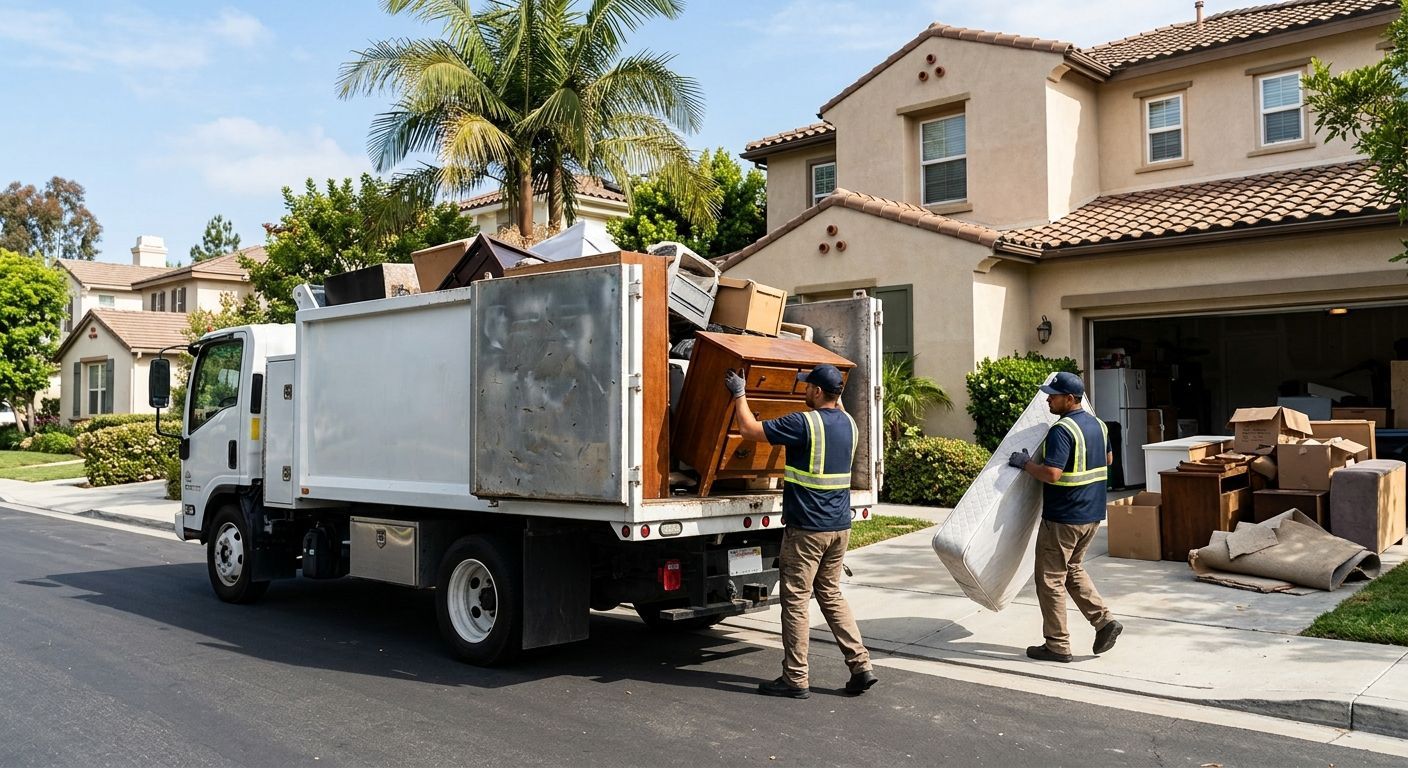
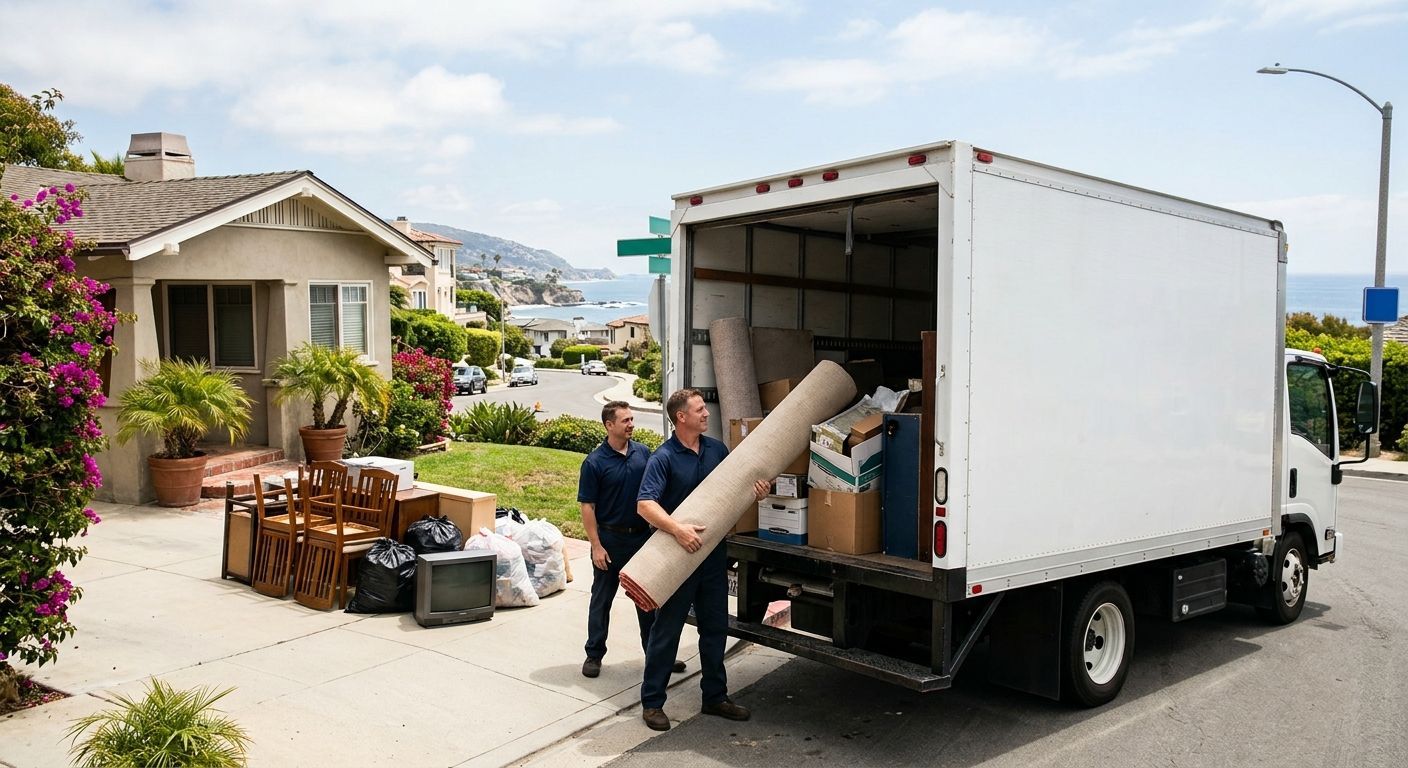
Two guys, a truck, and a walkthrough. The walkthrough is where we confirm what's leaving, and it matters more than it sounds. "Take the bedroom set" means one thing to the person who called and something slightly different to their spouse, and I have been on the wrong end of that conversation.
So we point at things. You say yes or no. Then we quote, before anything moves.
After that it's lifting. Down the stairs, around the banister, through whatever doorway the original delivery crew clearly measured more carefully than we'd like. We blanket the floors, pad the door frames, and sweep when we're done.
The part nobody watches is the sorting. A dresser in decent shape gets loaded differently than a water-damaged one, because they're going to different places later that day. Most of the actual work in this job happens after we leave your driveway.
You don't drag anything to the curb. Basement, third-floor walk-up, backyard shed, the garage nobody has opened since the pandemic. That's the job.
What we'll take
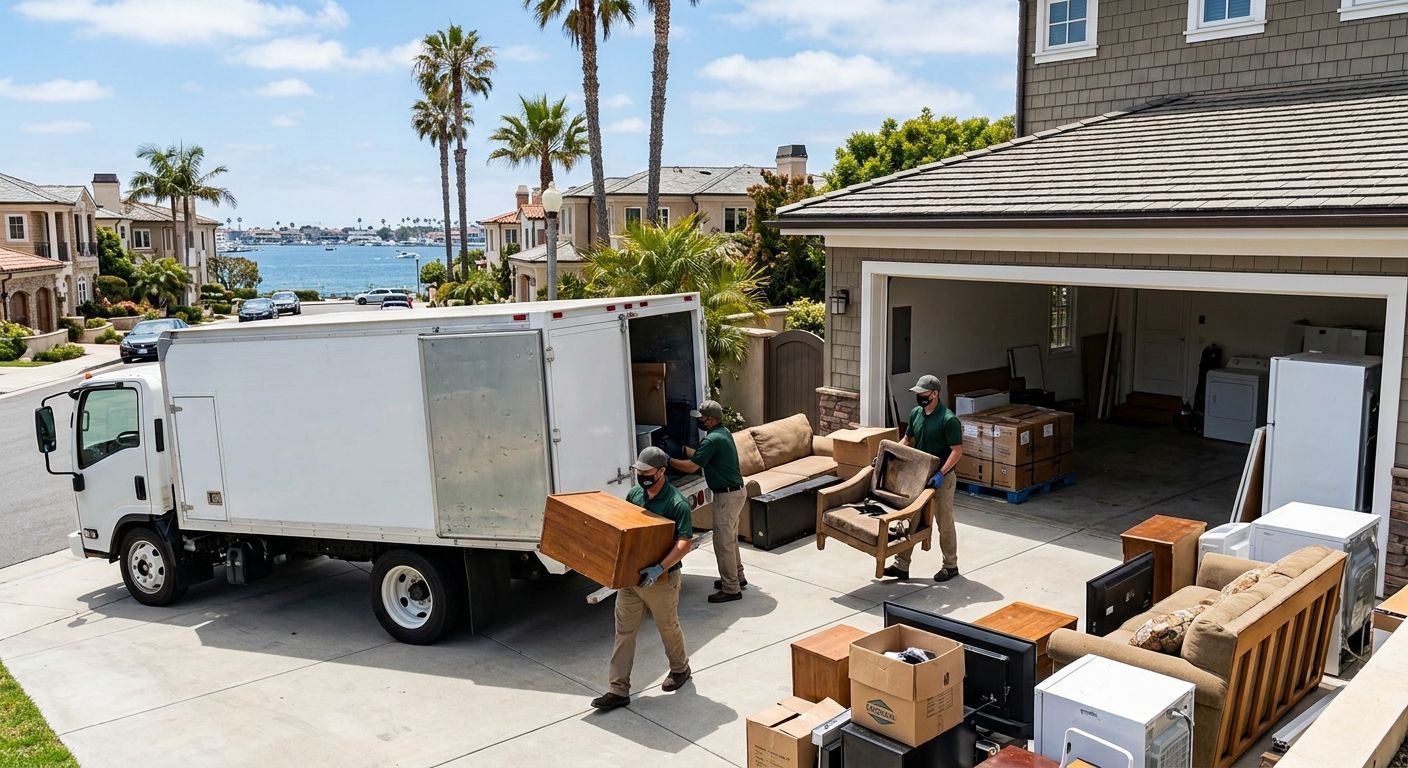
Roughly anything with legs, cushions, or drawers. Couches, sectionals, loveseats, recliners, sleepers. Mattresses and box springs. Bed frames, dressers, armoires, nightstands.
Dining tables and the chairs that never matched them.
Hutches, china cabinets, desks, bookshelves, entertainment centers for a TV that no longer exists since 2009. Office furniture, typically meaning cubicle walls and file cabinets.
Patio sets. Swing sets. Pianos and safes get quoted separately, because a spinet runs about 400 pounds and an upright can pass 600.
Old furniture removal for an estate or a foreclosure clean-out is the same work, just more of it. Short list of what we won't touch: active bed bugs, visible mold, anything with hazardous contamination.
Those need specialized handling under health and safety rules, and loading them into a truck alongside furniture headed for a charity would be a genuinely rotten thing to do. Not sure which side of that line your item falls on? Text a photo. We'd rather sort it out before we're standing in your hallway.
Couches get their own section, because they earn it
Couch removal is the most requested single job in this industry. Sofa removal has its own pricing tier at basically every company, and there's a real reason for it.
Sectionals come apart, which is fine, but it costs time. Sleepers are the heavy ones. Recliners have mechanisms that catch on door casings if you're rushing. And couches built in the 80s and 90s, the ones with actual hardwood frames, weigh considerably more than anything flat-packed in the last fifteen years.
People who've only ever moved IKEA furniture are consistently surprised by this. Every time condition decides the destination. No rips, no stains, no pet damage, no smell, and it's a donation candidate.
A torn arm, water ring, or an odor, and every charity we work with will turn it down, so it goes to recycling or disposal instead. Just tell us honestly what you've got. It changes where the couch ends up, not what you pay.
What it costs
Nobody can give you a real number over the internet. If a company quotes a firm price without seeing the load, they're either padding it or planning to renegotiate in your living room.
Here's what moves the number. Volume first, since most junk removal pricing works off how much space your stuff takes in the truck.
One armchair is a sliver of a load. A three-bedroom house is the whole truck and then a second trip. Weight matters too, and material more than people expect: solid oak, stone tops, and leather sectionals cost more to dispose of than particleboard, because the facility on the other end charges by the ton.
Access changes things. A garage pickup is quick. A fourth-floor apartment with a stairwell and no elevator is not. Disassembly adds time, mostly on bunk beds and wall units.
Then there's the cost nobody thinks about, which is where the furniture goes to die. Landfill tipping fees were averaged at $62.28 per ton in 2024, increased by approximately 10% compared to the previous year, according to the University of Michigan’s Center for Sustainable Systems.
The most competitive areas in the Northeastern region of the U.S. saw prices exceeding $100 per ton.
Haulers don't absorb that. It's baked into your quote whether anyone mentions it or not. Practically speaking, a single sofa removal sits near the floor of most companies' pricing, and a full-house clean-out sits at the ceiling.
The gap between those two is wide enough that guessing helps nobody. Send photos, get a real number. Ours are free, and we hold them.
Where the furniture actually goes
This is what separates a real furniture disposal service from a guy with a pickup and a landfill receipt.
Usable stuff goes to donation first. The Habitat for Humanity ReStore network is taking all the used furniture, appliances, and other goods in, restoring them to a condition good enough for resale at a discount, and reinvesting the profits back into the community from which the items originated in the form of affordable housing. They are very particular about the upholstery, which is understandable given their position.
Nobody wants a stained couch, and the store has to pay to dispose of anything it can't sell. When a piece qualifies, that's the best outcome available. Somebody who needed a dining table gets one they can afford, and 200 pounds stays out of the ground.
What can't be donated frequently still has metal in it. Bed frames, filing cabinets, the guts of a sleeper sofa, most office furniture. That stuff separates into scrap streams without much trouble. Office furniture is the easiest of the lot because it's built modular in the first place.
Landfill is last. Soaked, moldy, contaminated, or genuinely destroyed furniture goes to a licensed transfer station and gets handled properly. I'd rather it didn't, but pretending a mildewed mattress is donatable just moves the disposal bill onto a charity.
Decent furniture hauling means working that order honestly. With 80% of the country's discarded furniture going to landfills, the bar to beat is not high.
Should you just rent a truck instead?
For one small piece, probably. A nightstand fits in a hatchback, and you don't need us for that. Past about 150 pounds, the math shifts.
Truck rental runs $30 to $80 a day before fuel and mileage. Transfer stations charge by weight, and the rate swings hard by county, so you won't know your dump fee until you're on the scale. Add an hour of research into what your city takes curbside and on which week.
And then the injury risk, which people discount because they've moved furniture before. Back strains from lifting are common enough in this trade that we train around them, and a strained back costs more than any removal service.
The donation question usually loses in the DIY version too. Most people who rent a truck end up at the dump, because the dump is open, obvious, and doesn't inspect your cushions.
Why people call us
Three things customers kept telling us they couldn't get elsewhere: a real price before the work starts, crews who actually check whether something can be donated, and someone who can show up today when the closing is Friday.
Licensed, insured, and the number we say at the door is the number you pay. No fuel surcharge invented at the end of the job. No renegotiation with your sofa halfway down the stairs.
Frequently Asked Questions
How fast can you come?
Same-day or next-day pickups are typically possible, depending on the time of the call
Morning pickups are sometimes possible, and you'll always be given a specific time frame.
Do I need to be home?
Ideally, be present for the walkthrough so we can confirm items and give an accurate price.
If not, send clear photos and specific instructions so the crew knows exactly what to take.
Do I have to move anything?
No. You don’t need to move anything; our crew handles all lifting and removal from wherever it is. Just keep walkways reasonably clear to help speed things up.
Will you really donate it?
Yes, if an item is in usable, sanitary condition, we donate it to local partners.
Anything unsuitable is recycled when possible, with landfill as a last resort.
Cheaper than renting a truck?
Sometimes, once you add truck rental, fuel, dump fees, and your time, it often ends up similar or cheaper.
Plus, you don’t have to lift or move anything yourself.
Expert Advice for Homeowners
Don’t wait to schedule; clutter only builds up and gets harder to deal with. Take photos for accurate quotes, measure tight spaces in advance, and clearly separate what’s going versus staying to save time and money.
Ask where donated items go to gauge how responsibly a company works, and bundle removal with other projects to make everything faster and easier.
Expert Support for Your Project
Planet Haulers Junk Removal handles furniture removal as part of your larger project, helping prep spaces properly for painting, flooring, or renovation.
Whether it’s one item or a full cleanout, our crew does the heavy lifting so you don’t have to. Call 949-386-9808 or email office@planethaulers.com for a same-day quote.
You might also like