How Junk Removal Pricing Works: 7 Factors That Affect the Final Cost
Call three companies about the same pile of stuff in your garage and you'll often get three different numbers, sometimes a hundred dollars apart, for what looks like an identical job. That's not one of them padding the bill. It usually means each company is measuring the load differently: one by volume, one by weight, one by a quick estimate that never accounted for the two flights of stairs between the junk and the truck.
The U.S. Environmental Protection Agency (EPA) has tracked municipal solid waste generation for decades, and the totals run into the hundreds of millions of tons a year nationwide. A good chunk of that never makes it into a weekly trash bin. It goes out through junk removal services instead: old couches, broken appliances, renovation debris, the stuff too big or too awkward for curbside pickup.
If you've never booked a hauling crew before, the pricing can feel like it's made up on the spot. It isn't, once you know what's actually being measured. Here's how junk removal pricing works, and the seven things that push a quote up or down.
How junk removal companies calculate pricing
Most crews price a job one of three ways: by volume, by weight, or by a flat per item rate.
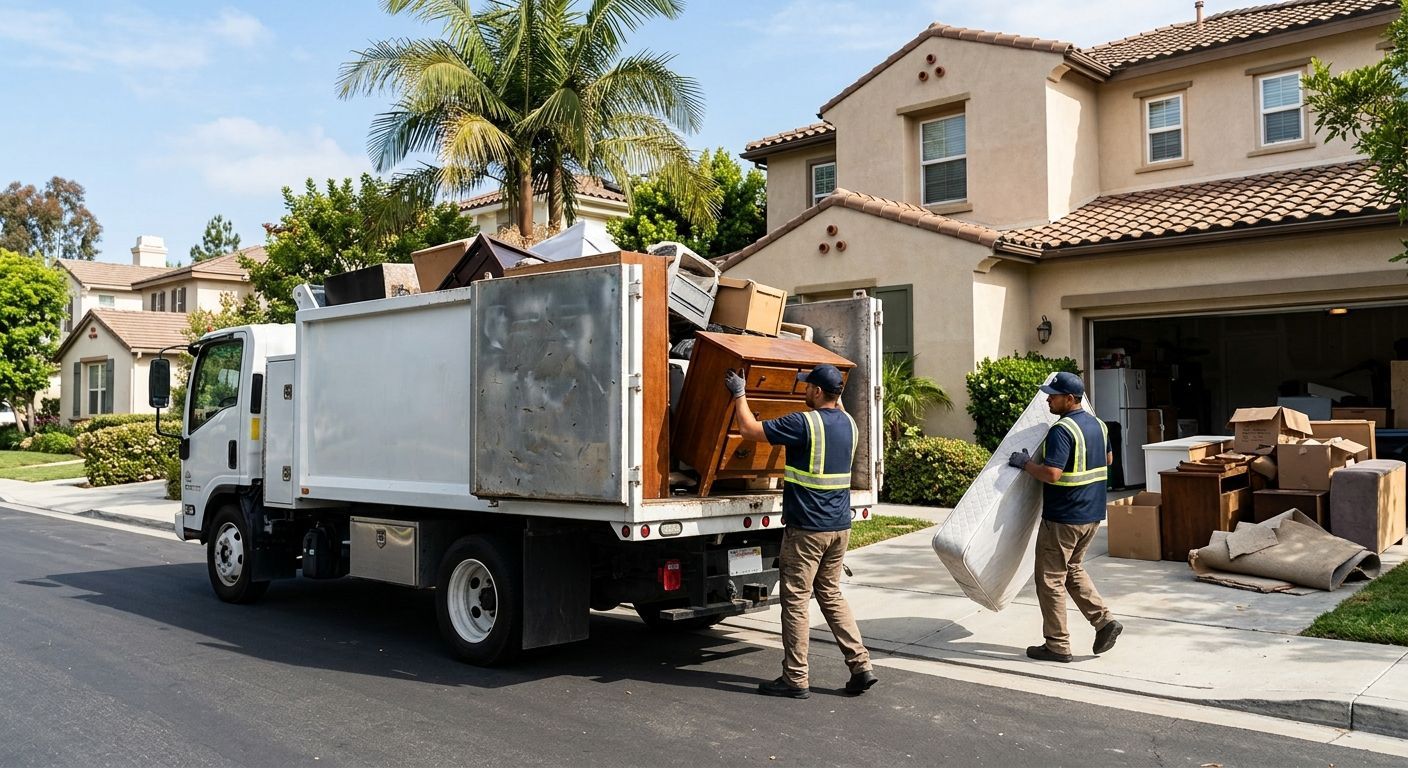
Volume pricing is the most common approach for residential junk removal. The truck bed gets marked off in fractions: an eighth, a quarter, a half, three quarters, full. You pay based on how much of that space your junk fills once it's loaded. A standard truck holds somewhere around 14 to 16 cubic yards, roughly six pickup truck beds of material.
Weight based pricing shows up more with construction debris, concrete, or yard waste, where volume alone is misleading. A truck a quarter full of broken concrete can weigh more than a truck completely packed with furniture and cardboard. Flat per item rates are common for single pickups, one couch, one refrigerator, one old grill.
That's really how junk removal companies calculate pricing. Everything else on this list, access, materials, labor, disposal, gets layered on top of whichever baseline method the company uses. If a quote seems off, ask which method it's based on. That one question clears up most of the confusion.
How much does junk removal cost on average?
Nationally, the average price for junk removal services runs in the low 200s for a standard job, but most homeowners can expect to pay somewhere between $150 and $370, depending on the amount of junk they're removing and what type of items they're removing.
Single item pickups are generally lower, $60 to $150 typically. The cost of a full truckload of mixed household waste will be $600 to $800 or more, depending on disposal charges and labor.
| Load size | Approximate volume | Typical cost range |
|---|---|---|
| Minimum/single item | Under 3 cubic yards | $75 to $150 |
| Quarter load | 3 to 4.5 cubic yards | $125 to $200 |
| Half load | 4.5 to 11 cubic yards | $200 to $400 |
| Three quarter load | 11 to 13 cubic yards | $400 to $600 |
| Full truckload | 13 to 17 cubic yards | $600 to $800 |
That's the general answer to how much junk removal costs , but treat it as a planning tool, not a quote. These figures are estimates for budgeting purposes. Actual pricing depends on the property, the type of debris, how accessible it is, and what the crew finds once they're actually looking at the job.
7 Junk Removal Pricing Factors
Here are the junk removal pricing factors that account for almost every dollar of difference between one quote and another.
1. Volume and weight of the load
This is the biggest driver of cost, full stop. A crew estimates how much truck space your items will take up, and heavier materials like tile or books get priced differently than bulky but light items like foam furniture, because weight limits kick in before space runs out. A garage that looks manageable from the doorway can still fill more of a truck than expected once everything's actually loaded and compacted down.
2. Type of material being removed
Not all junk costs the same to get rid of. Standard household clutter falls into a company's base rate. Appliances with refrigerants, mattresses, electronics, and anything hazardous usually carry an added charge, because they need different handling or a separate disposal facility. Paint, batteries, and chemicals can run $250 to $500 per ton at facilities that even accept them, which is part of why most crews won't touch hazardous waste on a standard job.
The EPA's household hazardous waste guidance explains that products such as paints, cleaners, oils, batteries, and pesticides require special care during disposal.
3. Labor required to remove it
Labor typically makes up $100 to $300 of a job's total, and that number climbs with every flight of stairs, every narrow hallway, every piece that needs two or three people instead of one. A couch on the ground floor with a clear path to the driveway is a different job than the same couch on a third floor walkup, even though it's the exact same piece of furniture.
4. What affects junk removal cost most: access
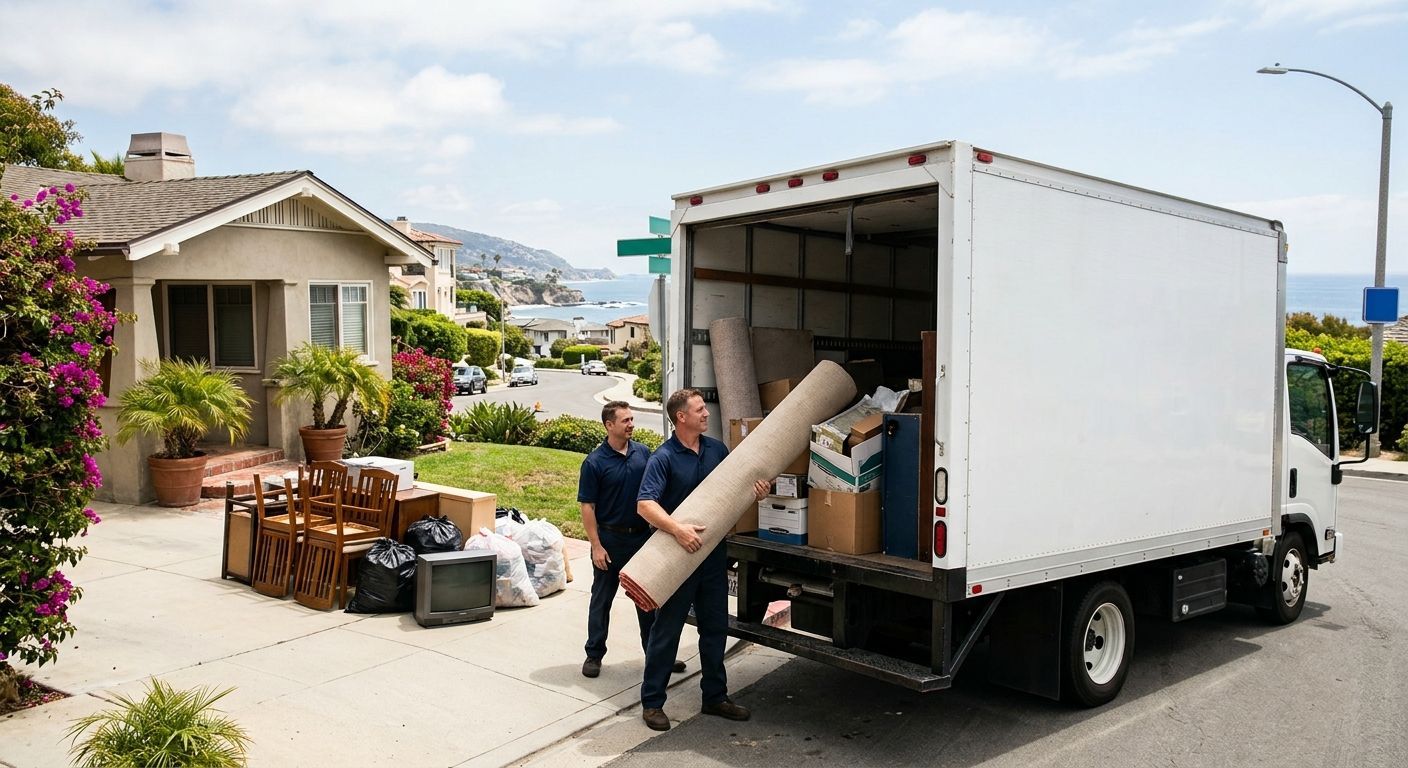
What affects junk removal cost just as much as the junk itself is how a crew has to reach it. Items already staged in a driveway or garage cost less to remove than the same items buried in a basement or scattered across a backyard. Long driveways, gated communities, street parking restrictions, all of it adds time before anyone's actually lifted anything, and time gets billed one way or another.
5. Local disposal and landfill fees
Every load ends up somewhere. Basic landfill entry fees might run $10 to $45 depending on vehicle size, while bulky or non recyclable waste is often billed by weight, commonly over $100 per ton at many facilities. A crew near a transfer station spends less on fuel and time than one driving an hour each way, and that gap shows up in your quote whether it's spelled out or not.
6. Distance and drive time to the job
Fuel, crew hours, truck wear, it all factors into overhead. A job across town costs a company less to service than one 40 minutes out. Some companies build a set service radius into their base pricing; others tack on a trip charge past a certain distance.
7. Timing and demand
Spring cleaning season, the weeks around a move, post renovation cleanups, demand climbs during all of them and pricing tends to follow. Same day or next day service usually costs more than scheduling a pickup a week out. If your timeline has some flexibility, mentioning that when you call can occasionally get you a better rate. Preparing for a junk removal appointment ahead of time can also help you choose a pickup date that works best for your schedule.
How junk removal pricing works
Before getting into specific price ranges, it helps to know what a quote is even based on. Most junk removal services aren't charging a flat rate for "junk." They're asking you to pay for weight on a scale or for space in a truck or even a per item charge and that's why the way a company operates can have an impact on how that particular load is priced.
Full-service Junk Removal vs. Residential Junk Removal: What's the Difference
Full-service junk removal
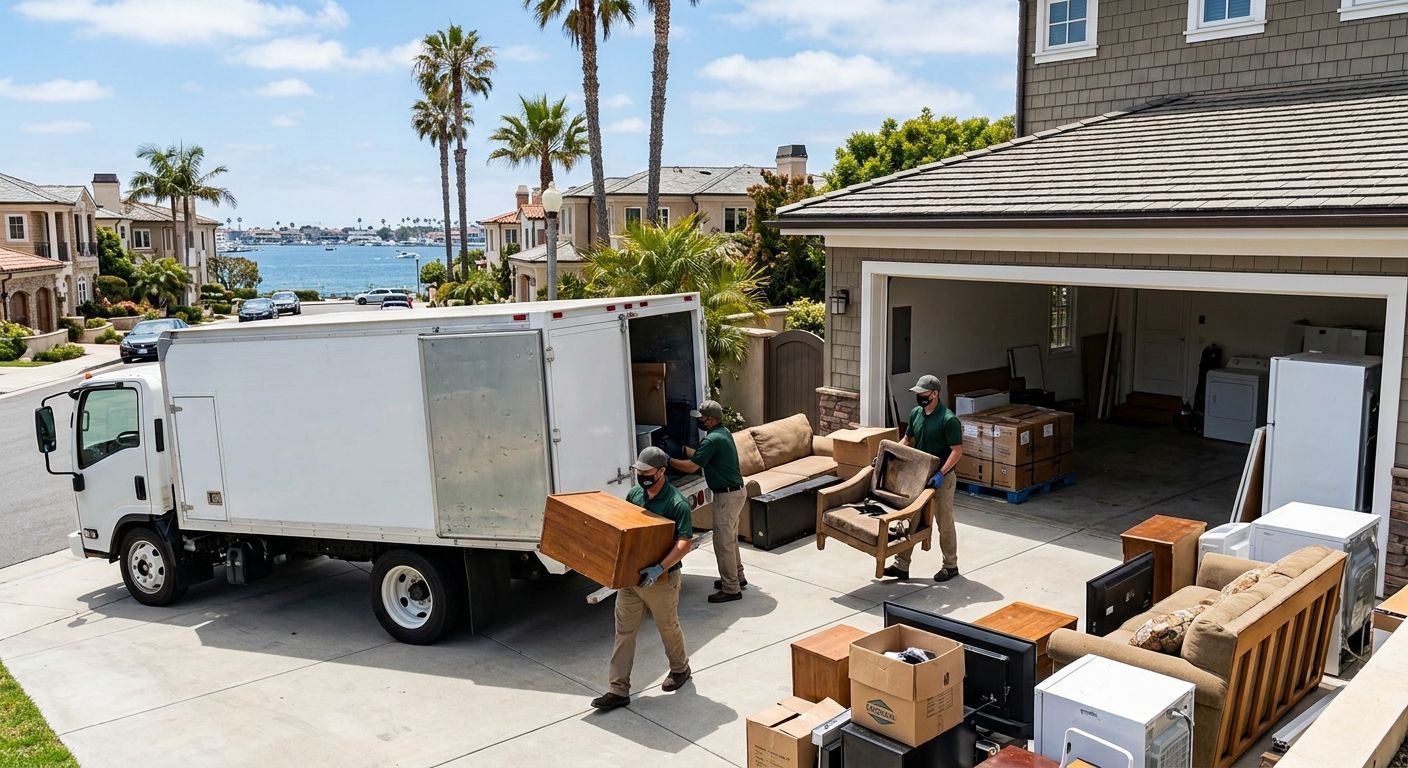
typically involves the removal crew lifting the pieces, putting them on the truck, and cleaning the area afterwards without you having to lift anything.
Residential junk removal
, such as taking away an entire mattress or two boxes of stuff left out, are all considered residential junk removal. Commercial jobs, on the other hand, are likely to be larger in volume, have different disposal requirements, and may have a recurring pick-up time, rather than a one-off job.
Junk removal estimate explained: what a real quote includes
A junk removal estimate explained the following: the method used to measure the load (volume, weight, or by the item); the types of items that are included in the number (labour, disposal, and any special handling); and what would affect the cost when the crew arrives in front of the load. Photo estimates are easy to do, but less accurate than an in-person walk-through, as photos do not show what's behind what's in front of it.
If a junk removal company provides you with a number that doesn't require you to discuss stairs, access, material type, or anything else, don't take it as a final number. And inquire for the minimum charge. Most companies have one, which is usually $75 to $100, and it is used for even one small item, if the crew is making a special trip for it.
Why junk removal prices vary by region
Pricing is influenced by regional cost of living, local landfill fees and number of crews competing for business. Labor and disposal costs are generally higher in dense coastal markets than in smaller inland markets and this can add up to 15 to 30 percent higher, depending on the market. This is part of why junk removal prices vary so much when people compare a national average against what they're actually quoted at home. The average is a starting point. It's not a promise.
Frequently asked questions
Is it cheaper to rent a dumpster instead of hiring a hauling crew?
For a single cleanout, usually not. Dumpster rentals often run a few hundred dollars a week, and you're still doing the lifting. A dumpster starts to make more sense for a multi week renovation where debris piles up gradually.
Do companies recycle or donate any of what they pick up?
Many do, at least partially. Furniture and appliances in decent shape sometimes get routed to donation centers instead of a landfill, and metal often gets pulled out for scrap. Ask directly, since it varies by company and by what local facilities will actually take.
What items typically aren't accepted?
Most crews won't take wet paint, chemicals, asbestos, or certain electronics without special arrangements, since those need licensed disposal. Tires and some appliances can also carry restrictions depending on local rules.
Can I get an estimate without anyone coming to the house?
Often yes, through photos or a phone description, especially for smaller jobs. Larger or more complicated cleanouts usually need someone to actually see it before you get a firm number.
How far in advance should I book?
A few days out is typical for routine jobs. Same day service is sometimes available depending on the crew's schedule, though booking during peak seasons like spring or right after a move usually needs more lead time.
Ready to clear the space?
Knowing how the pricing for junk removal services takes most of the guesswork out of it, but every property still looks a little different once someone's actually standing in it. Planet Haulers Junk Removal can walk you through what a job at your place is likely to run before anything's scheduled. Call 949-386-9808 or email office@planethaulers.com to talk through your cleanout.
Sources
- U.S. Environmental Protection Agency, National Overview: Facts and Figures on Materials, Wastes and Recycling. epa.gov
- Angi, How Much Does Junk Removal Cost. angi.com
- The EPA's household hazardous waste guidance explains that products such as paints, cleaners, oils, batteries, and pesticides require special care during disposal.
You might also like